Crown vs Filling: How Dentists Decide | Stuart
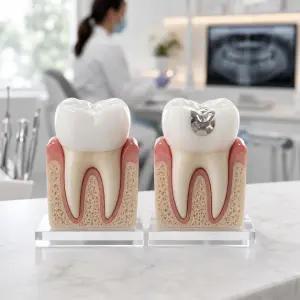
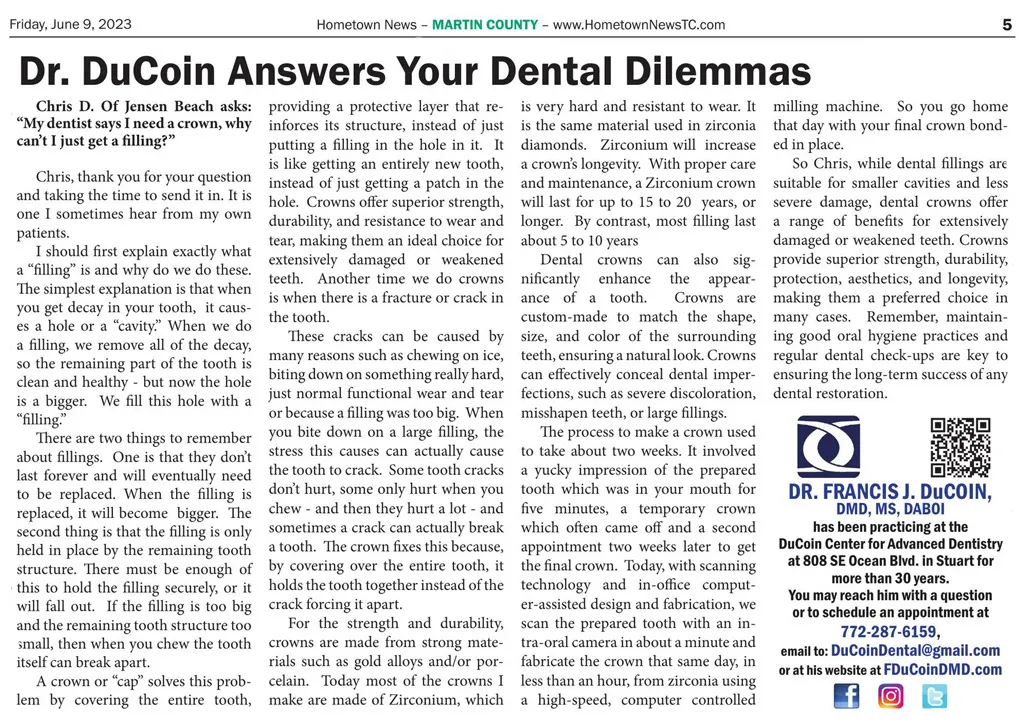
If you have a cavity, a chipped edge, or a worn-down tooth, it is normal to wonder what repair you actually need: a simple filling, or a crown. The choice is not about upselling. It is about how much healthy tooth is left and how likely that tooth is to crack or break under daily chewing.
At Frances J. DuCoin DMD, PA, Frances DuCoin and our team see one theme again and again: people feel better about treatment when they understand the decision. This guide breaks down the most common factors dentists use to recommend a filling or a crown.
TL;DR - The Crown vs Filling Decision Comes Down to Strength
Fillings repair small-to-moderate damage. Crowns reinforce teeth that are structurally weakened or at higher risk of fracturing. The goal is long-term function, not just closing a hole.
- Smaller cavity or minor chip: a filling is often enough.
- Large cavity or old large filling: a crown may protect the remaining tooth.
- Cracks or pain when biting: crown coverage is commonly recommended.
- Back teeth take higher forces: they may need a crown sooner than front teeth.
- Root canal history: many treated teeth benefit from a crown for protection.
What a Filling Does (And Where It Works Best)
A filling replaces decayed or damaged tooth structure and restores the tooth's shape. Modern tooth-colored materials can blend in naturally and work very well when the tooth still has plenty of strong enamel and dentin.
Common Situations Where a Filling Is Often Enough
- Small-to-moderate cavities where most of the tooth is still intact
- Minor chips or small areas of wear
- Replacing a small failing filling (depending on what is found under it)
- Areas that are not under heavy chewing load, when structure is strong
What a Crown Does (And Why It Is Different)
A crown is a custom cap that covers and protects the tooth. Think of it as structural reinforcement. It is designed to restore strength and help prevent cracks from spreading, especially on teeth that have lost a lot of natural support.
If you want an overview of indications and how crowns restore function, our dental crowns service page explains crown benefits and common reasons people need them.
When Dentists Commonly Recommend a Crown
-
The cavity is large relative to the tooth.
A big filling can act like a patch on a weakened wall. The more tooth structure that has to be removed to eliminate decay, the more likely the remaining tooth is to flex and crack.
-
There is a crack, craze lines, or a history of fractures.
A cracked tooth can be tricky because symptoms are not always constant. Pain that comes and goes with chewing, especially on back teeth, is a common clue.
If this sounds familiar, our cracked tooth page explains common signs that warrant evaluation.
-
A cusp (the pointed chewing part) is missing or undermined.
When a cusp is weakened, it can shear off like a thin piece of porcelain. Crowns often help by covering cusps and distributing bite forces more evenly.
-
There is a large, aging filling that keeps breaking down.
Replacing a large filling with another large filling may not address why it failed. In our experience, recurring fractures around old restorations often point to a tooth that needs reinforcement, not just replacement material.
-
The tooth has had root canal treatment.
Many root canal treated teeth benefit from extra protection because they may be more brittle and have reduced internal support depending on the amount of tooth removed.
For background on when endodontic care is recommended, visit our root canal treatment page.
How Chewing Forces and Tooth Location Affect the Choice
Molars and premolars do the heavy lifting. They absorb strong biting forces and side-to-side grinding. That is why the same size cavity might be treated differently depending on whether it is on a back molar or a front tooth.
A Simple Way to Think About It
- Front teeth: more often driven by esthetics and smaller chips, fillings may be appropriate when structure is intact.
- Back teeth: if a restoration is large, the long-term risk of fracture may make a crown a smarter choice.
What to Expect at Your Decision-Making Visit
A good treatment recommendation starts with diagnosing the problem correctly. That typically includes a clinical exam, checking how your bite hits, and X-rays when appropriate to evaluate the extent of decay or existing restorations.
Questions We Often Talk Through With Patients
- How much healthy tooth is left after removing decay or an old filling?
- Is there evidence of cracks, leaking edges, or recurrent decay?
- Is the tooth taking heavy forces because of your bite or grinding?
- What is the most conservative option that still protects the tooth long term?
Common Misconceptions About Crowns and Fillings
Misconception #1: "A bigger filling is always more conservative."
Preserving tooth structure is important. But if a tooth is too weakened, the most conservative choice can actually be the option that prevents future fracture and repeat repairs.
Misconception #2: "If it does not hurt, it does not need a crown."
Teeth can be structurally compromised without pain. Cracks and large failing fillings can progress silently until a piece breaks off or the nerve becomes irritated.
Misconception #3: "Crowns are only cosmetic."
Crowns can improve appearance, but their core purpose in restorative care is strength and protection, especially for back teeth and heavily restored teeth.
How This Fits Into Your Overall Dental Treatment in Stuart
The crown vs filling decision is one part of comprehensive care. If several teeth have recurring decay or older restorations, it may help to step back and review your overall risk factors, hygiene routine, and bite forces.
For a broader look at services and how different restorative choices work together, see our dental treatment options page.
FAQs
Not always. Fillings are excellent for smaller areas of decay or minor repairs. A crown is usually recommended when the tooth is weakened, heavily filled, cracked, or at higher risk of breaking under chewing forces.
The decision depends on where the crack is, how deep it goes, whether it causes pain on biting, and how much tooth structure is left. Cracks in back teeth and cracks that involve cusps often need crown coverage to reduce the risk of fracture.
Not necessarily. Many crowns are placed without root canal treatment. A root canal is considered when the nerve is infected or inflamed, which may show up as lingering temperature sensitivity, spontaneous pain, or certain findings on exam and X-rays.
Sometimes, yes. But when an old filling is very large or the remaining tooth walls are thin, a crown may be recommended because it can protect the tooth from splitting or fracturing over time.
Chewing pain can come from a bite that is slightly high, a crack, or a problem under the filling. It is best to schedule an exam promptly so your dentist can check the bite, evaluate for cracks, and recommend the right repair.
Related Reading
Conclusion: Choose the Option That Helps You Keep the Tooth
A filling restores a spot of damage. A crown protects a tooth that is at risk of breaking. If you are unsure which you need, the next step is a focused exam so you can make a confident decision based on the condition of your tooth, not guesswork.
If you are comparing options for dental crowns in Stuart or want a second look at an older filling, call our office at 772-287-6159 to schedule a visit.